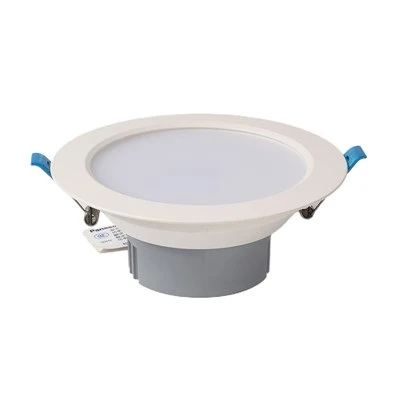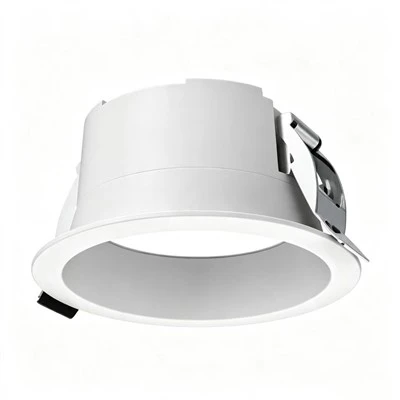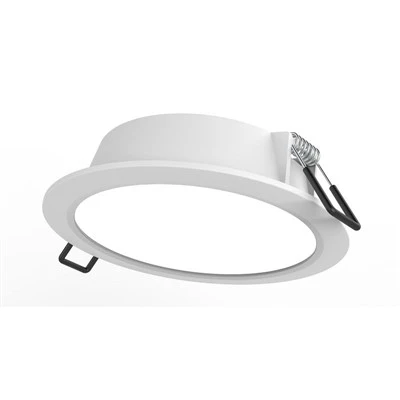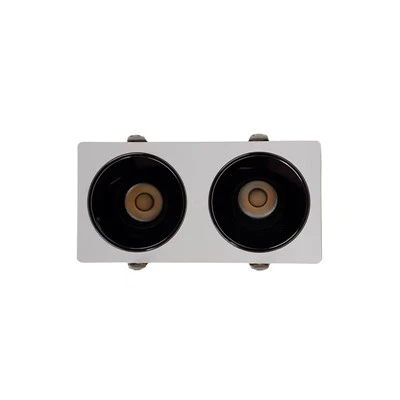

As LED lighting technology continues to advance, the structural design of LED downlights has been continuously refined to improve lighting performance, operational reliability, and product longevity. Through the integration of high-quality components and efficient engineering, modern LED downlights have become a preferred lighting solution for residential, commercial, office, and public buildings.
A typical LED downlight is composed of several essential components, including the LED light source, a constant-current driver, a thermal management system, optical elements, and a durable housing. Each component serves a specific purpose, working together to deliver stable illumination, efficient energy use, and dependable long-term performance. At the center of the fixture is the LED light source, which produces bright, uniform illumination while consuming significantly less energy than conventional lighting technologies.
The constant-current driver is another critical part of the overall structure. Its primary function is to convert alternating current into stable direct current while maintaining a consistent electrical output for the LED chips. A high-quality driver helps prevent brightness fluctuations, protects sensitive electronic components, and contributes to the overall reliability and service life of the lighting fixture.
Thermal management is equally important in the structural design of LED downlights. Although LEDs generate less heat than traditional light sources, effective heat dissipation remains essential for maintaining performance and extending operational life. Modern LED downlights commonly incorporate aluminum heat sinks, integrated cooling structures, and optimized fin designs to transfer heat efficiently, reduce operating temperatures, and minimize lumen depreciation over time.
The optical system also plays a vital role in lighting quality. Components such as precision lenses, reflectors, and high-transmittance diffusers help distribute light evenly while reducing glare and improving visual comfort. At the same time, manufacturers continue to refine the housing design by making fixtures lighter, more compact, and easier to install, allowing them to integrate seamlessly into a wide variety of architectural and interior environments.
Industry experts believe that continued innovations in materials, manufacturing processes, and intelligent product design will further improve the structural performance of LED downlights. Future products are expected to feature more modular designs, greater durability, and higher efficiency, supporting the ongoing development of sustainable buildings and next-generation smart lighting systems.