
With the growing popularity of green lighting concepts and continuous advancements in LED technology, LED panel lights have become an important lighting solution for offices, commercial spaces, schools, hospitals, and residential environments due to their energy efficiency, uniform illumination, and long service life. Compared with traditional lighting fixtures, LED panel lights use advanced light source technology and scientific structural designs to deliver softer and more efficient illumination. Understanding how LED panel lights work helps reveal their technical advantages and practical value.
The working principle of LED panel lights is mainly based on LED semiconductor lighting technology. When electric current passes through an LED chip, electrons and holes inside the semiconductor material undergo energy conversion and release visible light. Since LEDs are solid-state lighting components, they do not rely on heated filaments or gas discharge to generate light. This allows them to achieve higher electrical-to-light conversion efficiency and lower energy consumption. A stable current regulated by the driver power supply enables the LED chips to produce consistent illumination.
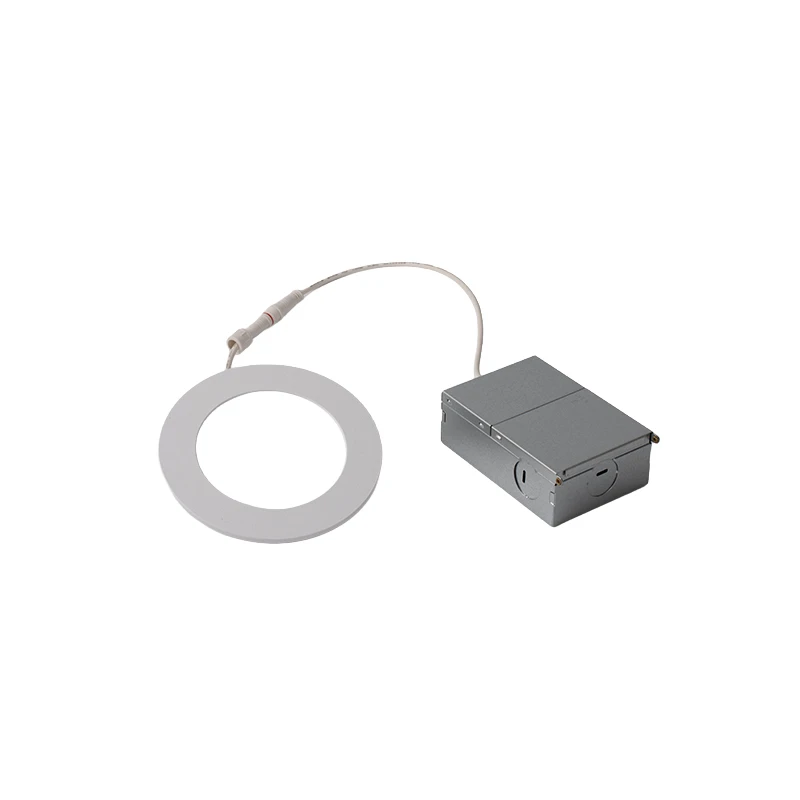
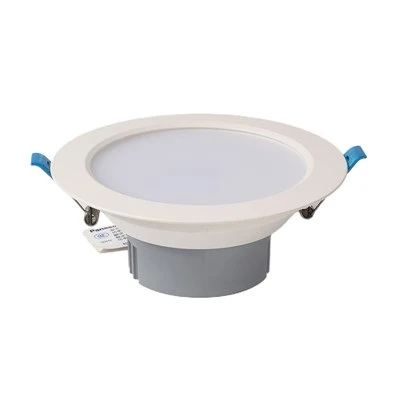
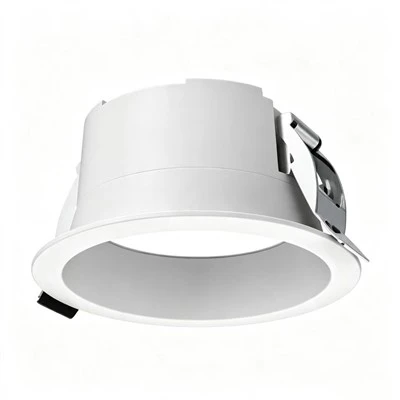
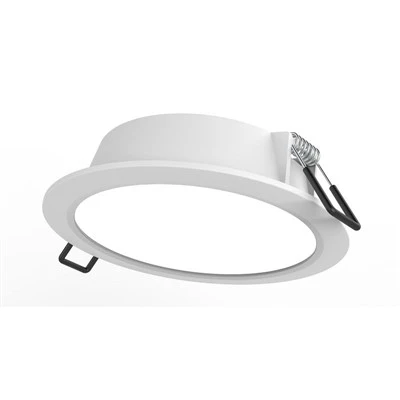
An LED panel light is mainly composed of LED light modules, a driver power supply, a light guide plate, a diffuser panel, reflective materials, and a frame structure. The LED light module is the core component responsible for converting electrical energy into light energy. The driver power supply regulates input voltage and current to provide stable operating conditions for the light source. The light guide plate plays a key role in achieving uniform illumination by using advanced optical designs to distribute LED light evenly across the entire panel and reduce differences between bright and dark areas.
During operation, uniform light distribution is one of the most important technical features of LED panel lights. Traditional lighting fixtures may create concentrated light or uneven brightness, while LED panel lights combine light guide technology with diffusion materials to spread light softly and evenly. This design reduces visual fatigue and improves overall lighting quality in indoor spaces.
The thermal management system is also essential for stable LED panel light operation. Although LED technology offers high efficiency, it still generates some heat during use. If heat cannot be effectively released, it may affect LED performance and service life. Therefore, modern LED panel lights typically use aluminum frames, efficient heat dissipation structures, and optimized internal layouts to improve heat transfer and ensure reliable long-term operation.
In addition, LED panel lights can be integrated with smart control technologies to provide more flexible lighting management. Some products support brightness adjustment, color temperature control, remote operation, and intelligent scene switching, allowing lighting conditions to be customized according to different environments while improving energy efficiency.
Today, LED panel lights are widely used in office buildings, conference rooms, shopping centers, schools, hospitals, hotels, and residential areas. With the development of smart buildings and energy-saving technologies, LED panel lights will continue to improve in lighting efficiency, intelligent control, and sustainable design, providing more efficient, comfortable, and environmentally friendly solutions for modern lighting systems.
Industry experts believe that future LED panel lights will further integrate advanced optical technologies and intelligent systems, continuously improving product performance and creating healthier, more energy-efficient, and higher-quality lighting environments for users.